
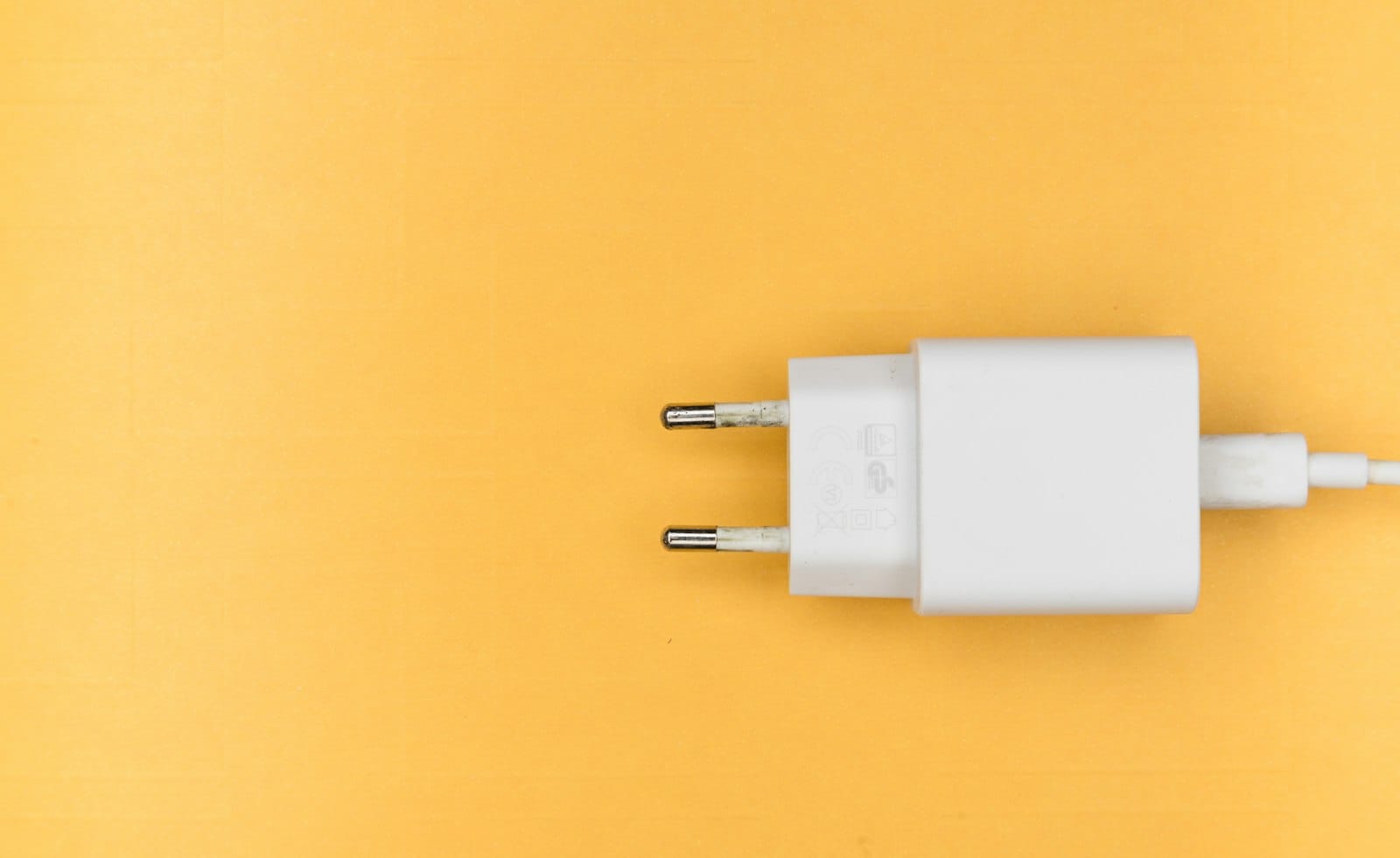
A travel plug adapter only changes the shape of the prongs so your charger fits a foreign socket. It does not change the voltage. Before you buy one, check two things: the socket type at your destination and the input range printed on each device you plan to bring.
Get those two answers right and you can pack a single small adapter with confidence, instead of guessing in a departure lounge shop at twice the price.
What a travel plug adapter actually does
Think of an adapter as a translator for shape only. According to the World Standards guide for travellers, travel adapters do not convert voltage, so a plug adapter on its own is fine only when the local voltage matches what your device expects, or when the device is multi-voltage.
A converter or transformer is a different gadget. It changes the voltage itself, and most travellers never need one, because modern phone, tablet and laptop chargers are built to handle a wide range.
Find the socket type for your destination
There are 15 types of household plug in use around the world, and the lettering from A upwards is completely arbitrary, as the plugs and sockets overview points out. You do not need to memorise them. You only need the letters for the countries on your route.
- Types A and B are found mainly in the USA, Canada and Mexico, and type A also in Japan.
- Type C is common across Europe, Africa, South America and parts of Asia.
- Type F is used almost everywhere in Europe, except the UK and Ireland.
- Type G is used mainly in the UK, Ireland, Malta, Malaysia, Singapore and the Arabian Peninsula.
- Type I is used mainly in Australia, New Zealand, China and Argentina.
Search for your destination on the same site, write the letters in your phone notes and take a photo of the list. If your trip crosses several countries, you will see at a glance whether one adapter covers them all.
Read the label before you pack anything
The label usually sits on the back or underside of the charger or device, in small print. Look for a line that says input. If it reads something like 100-240 V, the device is multi-voltage and needs only an adapter. If it shows a single value such as 120 V and you are heading to a 230 V country, plugging it in without a converter is a bad idea.
REI’s electricity guide makes the same point: two voltage bands cover most of the world, roughly 110 to 127 V and 220 to 240 V, and a device marked for both needs no conversion.
Take a minute to check each item on your packing list. Most people find that the phone, laptop, camera charger and e-reader are all dual voltage, while a hair dryer, curling iron or electric shaver may not be.
Be careful with hair dryers and other heating gadgets
Heating appliances are the usual troublemakers. Hair dryers, irons and kettles draw a lot of power, often somewhere between 1,600 and 2,000 watts, and they are rarely dual voltage. The simple answer is to leave them at home and use the one in your hotel or rental, or buy a dual-voltage travel model made for the job.
If you must bring one, check the wattage on its label and make sure any converter is rated comfortably above it. Never run a converter for long periods, and unplug it when you are finished.
Choose an adapter that suits how you travel
Once you know the socket letters, you can pick a style. A single-country adapter is small and cheap. A universal adapter covers many types, but REI cautions against assuming one will work everywhere, so confirm that it includes the plug shape or setting for your destination.
- Count your devices. One adapter plus a multi-port USB charger often does the job of three adapters.
- Check that the adapter fits snugly in the wall, because loose ones can disconnect your charger overnight.
- Keep the adapter in the same pouch as your charging cables so it never gets left behind.
- Remember that some hotels have universal outlets, but the café next door probably will not.
If you are still deciding what goes in the bag, our simple carry-on packing method shows where a small cable pouch fits best.
Charge smart on the road
A power bank is useful when you spend long days out, and our guide to using offline maps for travel explains how to cut down on battery-draining data use. Before you leave, free up space with our tips on what to do when phone storage is full, so your phone does not slow down at the worst moment.
At night, charge the essentials first: phone, then power bank, then everything else. Do not leave charging devices on a pillow or under bedding.
Frequently asked questions
Do I need a travel plug adapter for every country?
No. Many neighbouring countries share the same plug type, so one adapter may cover a whole trip. Check the socket letters for each stop and compare them.
Is a travel adapter the same as a voltage converter?
No. An adapter changes only the plug shape, while a converter or transformer changes the voltage. Most phone and laptop chargers need only an adapter, since they accept a wide input range.
Can I plug a US device into a European socket?
Only if the label shows it accepts the higher voltage, such as 100-240 V. If it lists a single low voltage, you need a converter or a different device.
Your next step
Tonight, pick your destination, note the socket letters and read the labels on everything you plan to charge. Pack one adapter and one multi-port charger, and you are ready for the trip.