
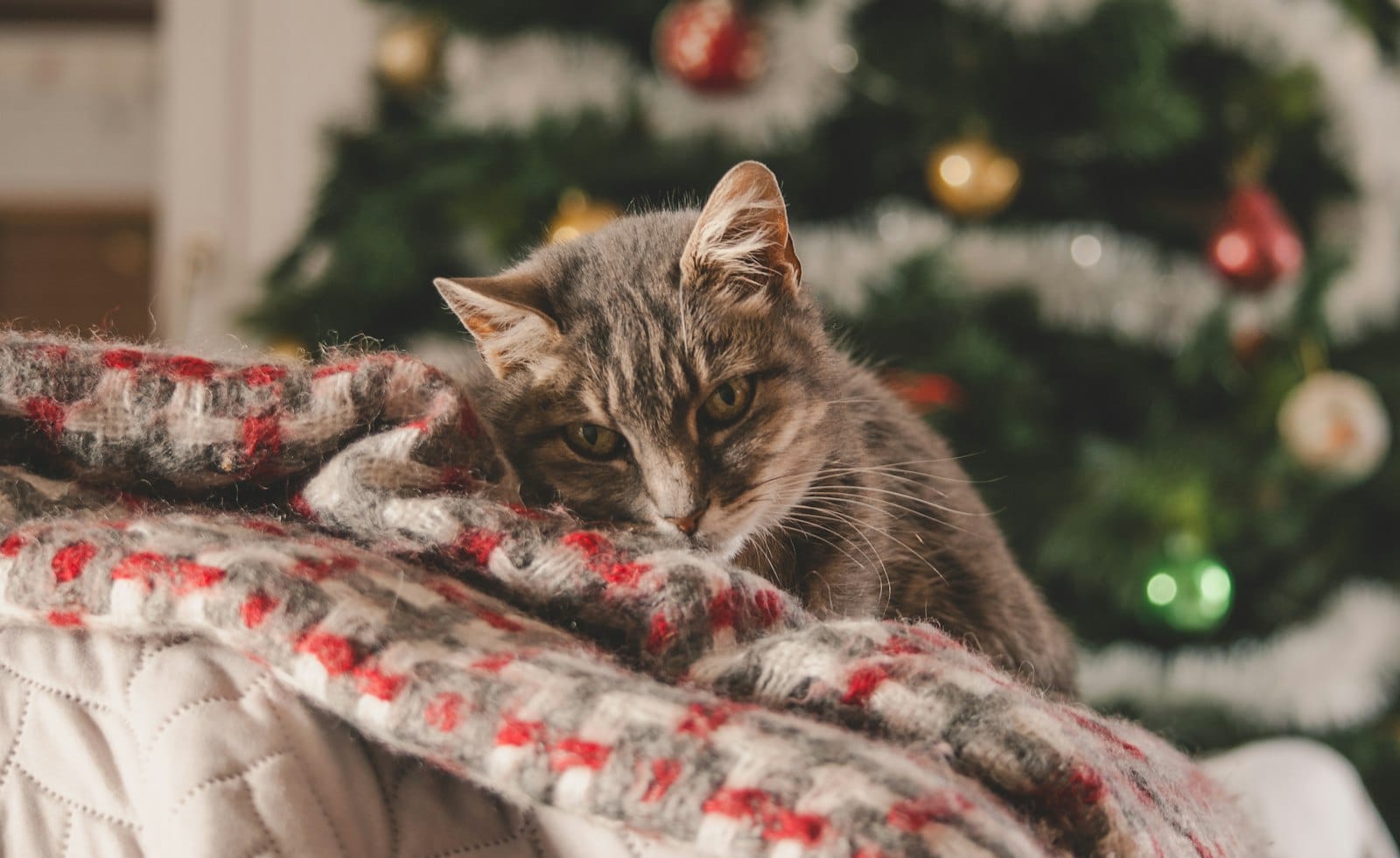
If you want to cat-proof a Christmas tree, the short answer is to make it stable, make it boring and make it hard to reach. Anchor the tree so it cannot topple, keep the lower branches plain and give your cat something better to do than climb. Here is how to set it all up in a calm, step-by-step way.
Start With the Right Spot and a Stable Base
Cats climb because the tree looks like a tall, shiny, rustling playground. The first job is to make sure that if your cat does jump on it, nothing falls over. Choose a corner or a spot against a wall, and keep the tree away from shelves, sofa backs and window sills that work as launch pads.
Then check the base. A wobbly stand is the number one reason trees end up on the floor. Add weight to the stand, widen it if you can, and tie the top of the tree to a wall hook or the ceiling with clear fishing line or thin cord. A smaller tree is also easier to secure, so a tabletop tree on a sturdy surface is worth considering in a small home.
Leave the Tree Bare for a Few Days
One of the easiest tricks is patience. Put the tree up undecorated and let your cat inspect it, sniff it and get bored. A tree that was introduced quietly stops being an event. Once the curiosity has faded, decorate gradually instead of all in one evening, so nothing changes too dramatically overnight.
Decorate Smart, Not Low
Think of the bottom third of the tree as a no-decoration zone. Hanging baubles at paw height look exactly like toys, and glass ones can shatter into sharp pieces. Cats Protection advises against fragile decorations and suggests hanging them near the top, out of reach, which is a sensible rule for any home. You can read more in their guide to cats at Christmas.
- Choose unbreakable decorations such as felt, wood, paper or plastic ornaments for the lower branches.
- Skip tinsel and loose ribbon, which cats find irresistible to bat, chew and drag around the house.
- Attach decorations firmly with wire hooks or a loop of thread instead of loose hangers that slip off easily.
- Put a few bells near the tips of the branches so you can hear when someone is climbing.
Keep Lights and Cables Out of Paw Range
Fairy lights and cords are tempting to chew and tangle. Run the cable along the wall or under a rug, cover it with a plastic or cardboard cable tube, and switch the lights off at the socket whenever you leave the house. If you are choosing lights, battery-powered strings remove the cable problem almost entirely, and they are easier to place high on the tree.
Make the Tree Less Interesting Than the Alternatives
Most cats go for the tree because nothing else in the room is as exciting. Fix that and half the problem disappears.
- Offer a better climbing spot. Place a cat tree or a sturdy shelf near a window, well away from the Christmas tree, so your cat has a legal vantage point.
- Add daily play. Ten minutes with a wand toy before you leave the room burns energy that would otherwise go into tree acrobatics.
- Try gentle deterrents. Many cats dislike foil or double-sided tape on the floor around the base. Test a small patch first, and move the foil away once the habit has changed.
- Rotate toys. Bring out a few new ones in December so there is something fresh that is not hanging from a branch.
If your dog also needs entertaining while the house is busy, our list of indoor dog games for long, dark evenings works nicely as a calming evening routine for the whole household.
Give Your Cat a Quiet Retreat
The festive season brings visitors, unusual smells and rearranged furniture, and that is a lot for many cats. Set up a quiet room or a covered bed where your cat can retreat, with food, water and a litter tray away from the noise. If you are preparing for guests, our tips on how to prepare a guest room can help you plan a calm space for people while your cat keeps one of its own.
Put a note on the door if the room is a cat refuge, so well-meaning visitors do not wander in and open it up. A predictable hiding place makes your cat feel safer and keeps the tree from becoming an escape route. If you ever worry that your cat has swallowed something it should not have, contact your vet for advice.
Where to Start
You do not need to do everything at once. Start with the base and wall anchor, because that is the safest change. Then decorate high, tidy the cables and add a cat-friendly alternative somewhere else. If your dog is also adjusting to darker evenings, it helps to keep walks safe and predictable too, and our guide on how to walk a dog in the dark covers it.
Frequently Asked Questions
Is a real or artificial tree easier to cat-proof?
Either can work. An artificial tree is lighter on mess and does not drop needles or hold water in the stand, but a real tree is fine if you cover the base with a skirt and keep the stand firmly anchored.
How long until my cat loses interest in the tree?
Many cats settle within a week or two, especially if the tree was bare at first and there are better play options nearby. Keep the setup consistent and stay patient.
Should I close the door to the tree room?
If your cat keeps climbing, shutting the door when you are out is the simplest safety net. Combine it with a stable base and secured lights for peace of mind.