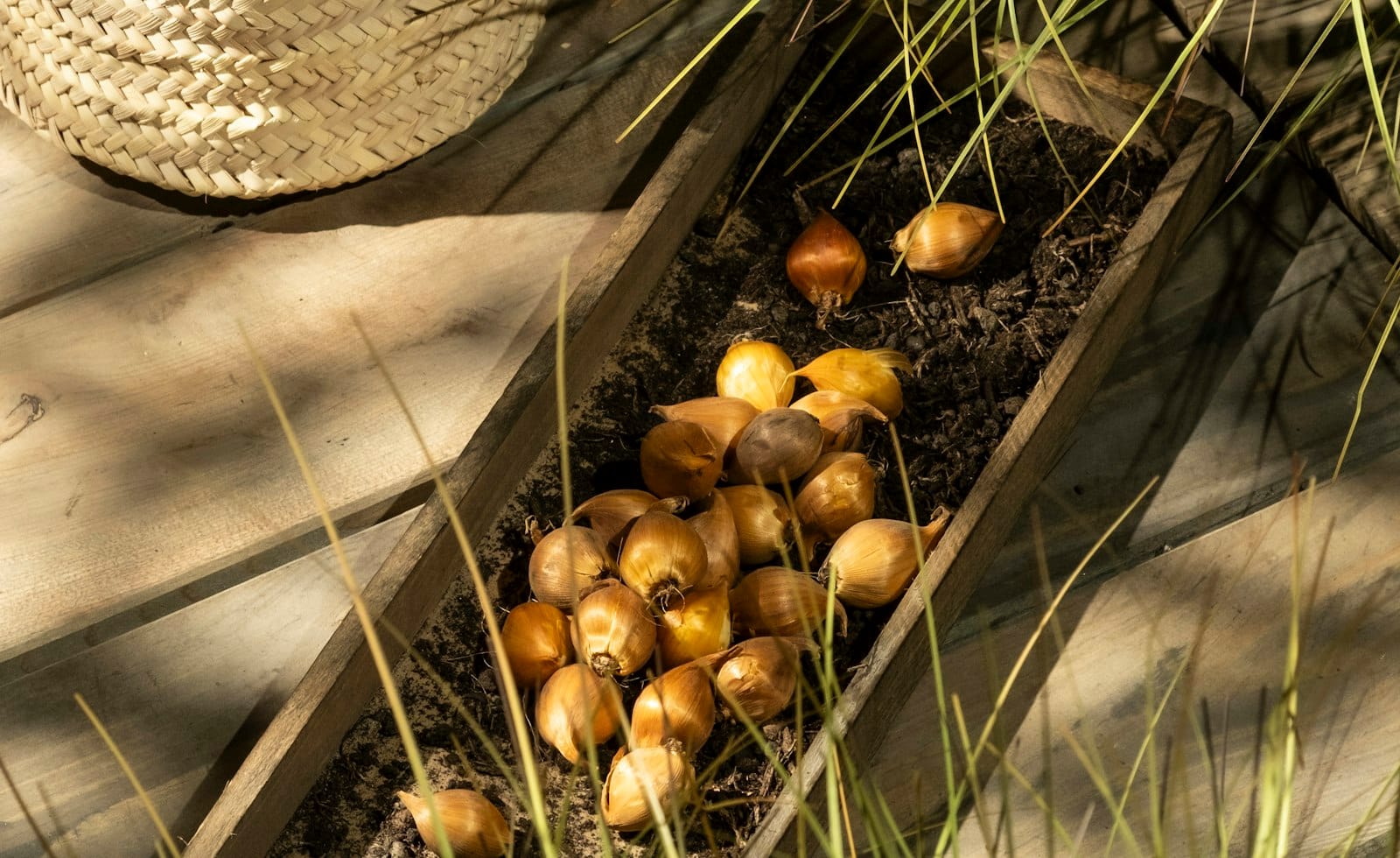
If you want a yard full of colour next April, now is the time to plant spring bulbs. The job takes an afternoon, needs only a trowel and a bag of bulbs, and the rest happens quietly underground all winter. Here is the simple walkthrough: when to plant, how deep to dig, which way up the bulb goes and how to protect it until it blooms.
When to Plant Spring Bulbs
The sweet spot is autumn, once the soil has cooled down. Rutgers University’s extension service recommends planting spring-flowering bulbs from mid-September through October, when soil temperature drops below 60°F (about 15°C). If you have a cheap soil thermometer, push it a few inches into the ground in the morning. No thermometer? Planting when the days feel properly crisp works well too.
Do not panic if a bag of bulbs has been sitting in the garage since September. Bulbs left in the bag are not useful to anyone, so plant them as soon as you can work the soil. Just avoid planting into ground that is frozen solid.
Choose Healthy Bulbs and a Good Spot
Pick bulbs that feel firm and heavy for their size. Leave behind any that are mouldy, squishy or noticeably dried out. Larger bulbs generally have more energy stored for the first flowers, which is why bigger usually means a better show.
Then think about location. Most spring bulbs like a spot that gets decent sun, and they all dislike sitting in a puddle. Look for a place where water drains away after rain, such as a sunny border, the base of a deciduous tree or the edge of a lawn you do not mind leaving a little longer in spring.
Prepare the Soil for Better Drainage
The same Rutgers guide stresses soil that drains well but still holds some moisture. In heavy clay, mix in compost or peat moss to open it up; in sandy soil, the same additions help it hold water. Loosen the soil with a fork first so the roots have an easy start. This small step matters more than any fertilizer, because soggy ground is what causes bulbs to rot.
How Deep to Plant: The Simple Depth Rule
The classic rule is to plant a bulb two to three times as deep as the bulb is tall. Using that rule, the Rutgers guide gives these practical figures:
- Large bulbs such as tulips and daffodils: about 8 inches (20 cm) deep and about 8 inches apart.
- Small bulbs such as crocus and anemones: about 3 to 4 inches (8 to 10 cm) deep and the same distance apart.
A handy trick is to dig one wide hole or trench instead of many single holes. You can then arrange the bulbs in groups of five or more, which looks far more natural than a straight line of soldiers.
Plant the Right Way Up
- Dig the hole or trench to the depth that suits your bulb size.
- Place each bulb with the pointed end facing up and the flat, root-bearing end facing down.
- Cover with soil and press down gently so there are no big air pockets.
- Water once to settle the soil and encourage roots to start.
If you cannot tell which end is which, lay the bulb on its side. The shoots will find their way up, although they will use a little extra energy doing it.
Water, Mulch and Protect From Hungry Wildlife
One good watering after planting is enough to wake the roots up. Do not keep watering a lot, since too much water encourages rot. After that, a two to three inch layer of mulch evens out temperature swings and keeps moisture steady; go lighter over small early bloomers so the shoots can push through.
Squirrels, voles, rabbits and deer all enjoy certain bulbs. Rutgers suggests covering tulips and crocuses with wire mesh at planting time if animals are a problem in your area. Cut the mesh a little larger than the planting area and pin it down with garden staples.
Make It Part of Your Autumn Routine
Bulb planting fits nicely into a wider autumn reset. If you are already cleaning up beds, you will not need much extra time. And if you keep putting the job off, our guide on how to stop procrastinating has simple tricks like the two-minute rule. Once the garden is done, bring some of the season indoors with these ideas for a cozier home this autumn, and keep your tools and bags tidy with our advice on how to organize your home, garage included.
Frequently Asked Questions
Is it too late to plant spring bulbs in October?
No. Rutgers lists October as part of the planting window, so you are right on time. Plant as soon as you can and before the ground freezes.
Can I plant spring bulbs in pots?
Yes, as long as the pot has drainage holes and a free-draining mix. Use the same depth rule and make sure the pot never sits in standing water.
What if I plant a bulb upside down?
It will usually still send up a shoot, but it has to turn around underground first. Pointed end up gives the best start.
Your Next Step
Grab a bag of bulbs this week, mark out a sunny corner and give yourself one afternoon. Dig to the right depth, point the tips up, water once and forget about them until spring. Come April, you will be glad you did.